01Workforce system
SkillBridge
Put the right capability behind the scope.
- Find and qualify talent
- Vet credentials and readiness
- Train to the operating standard
- Onboard before deployment
- Match by scope and verified performance
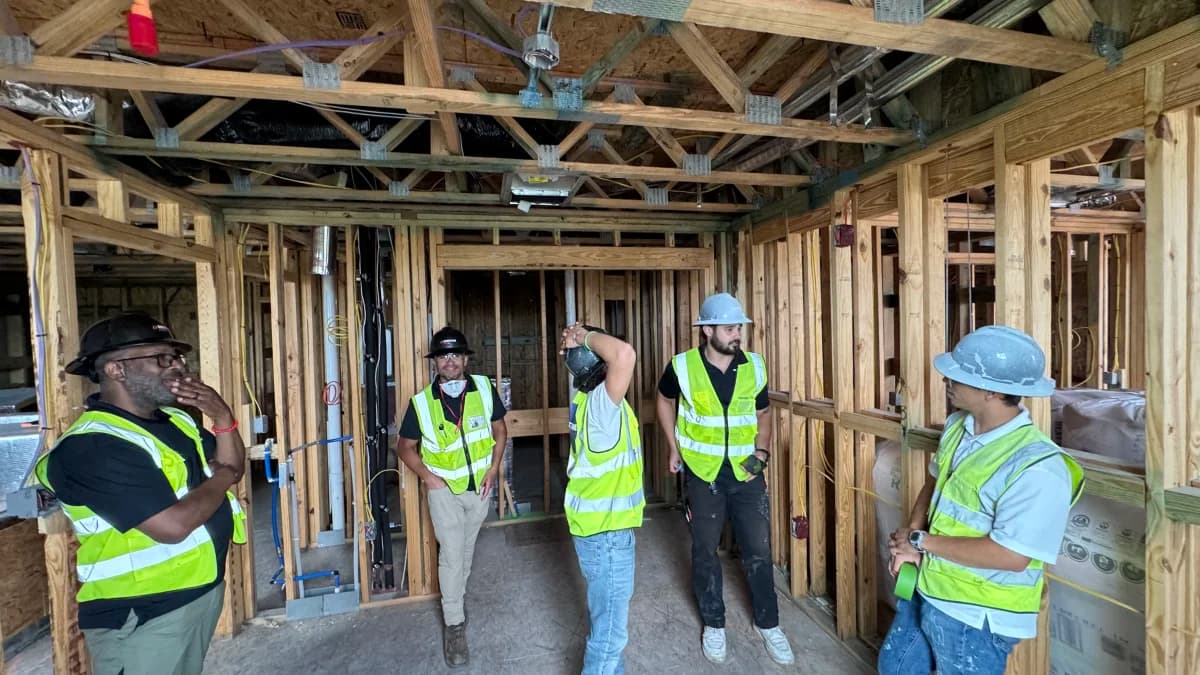
A wall opens. Concealed conditions appear. RestoreFast keeps the scope, crew, evidence, communication, and commercial response on one operating spine—so change is managed, not rediscovered.
Condition captured where the work changed
Scope, evidence, communication, and risk linked
Owner, gate, and commercial impact made explicit
Qualified people receive the right instructions
Proof, reporting, and closeout complete the loop
The RestoreFast operating spine
People, field execution, and oversight share the same project context. Every decision has an owner; every action leaves proof.
Why conventional scaling breaks
Traditional contractors widen the map, add volume, hire people, and hope experience can bridge disconnected systems. RestoreFast adds work to a common protocol.
The operating proof ledger
A photo or message is weak evidence alone. RestoreFast preserves the chain from commercial scope through field work, decisions, client outputs, and closeout.
Approved work package and commercial definition
Qualifications, availability, and earned field history
Time-stamped activity attached to the work unit
Evidence captured where the condition exists
Human approval, rationale, and accountable owner
Client-ready output generated from operating context
Completion proof closes the loop
The compounding advantage
What the system thought. What the expert knew. Why the expert was right. RestoreFast keeps the entire correction—not just the final answer—linked to the work that proved it.
Photo, location, observation, and project context
LinkedA next action generated from the available record
LinkedField judgment changes the proposed path
LinkedThe why stays linked to the decision it changed
LinkedCompletion proof closes the learning loop
LinkedJudgment drives value. Craft earns more.
Fewer handoffs. Earlier, clearer decisions.
Operating memory compounds while risk stays visible.
RestoreFast manages the people, process, evidence, and execution risk under its operating model. Clients keep the outcome—not a chain of passed-down responsibility.
Ready to scale with certainty?